If you’ve ever tried to greet someone from Ghana or translate a simple phrase, you’ve probably realized something confusing: there isn’t just one ghana language spoken. Many people search for answers like “what is ghana language” or “hello in ghana language,” expecting a single clear response—but Ghana is actually one of the most linguistically diverse countries in Africa.
In everyday situations—traveling, chatting online, or learning a new language—this can feel overwhelming. Which language should you learn? How do you say “thank you in ghana language”? And is Twi really the most important one?
This guide simplifies everything. You’ll learn how languages work in Ghana, why Twi is so widely used, and how to translate common phrases easily. Whether you want a quick ghana language translator solution or you’re serious about learning, this article gives you clear, practical answers without confusion.
What Is Ghana Language? (Simple Answer)
The question “what is ghana language” doesn’t have a single answer.
Here’s the reality:
- Ghana has over 70 languages
- English is the official language
- Several local languages are used daily
Most Common Languages:
- Twi (Akan dialect)
- Ga
- Ewe
- Dagbani
Practical Insight
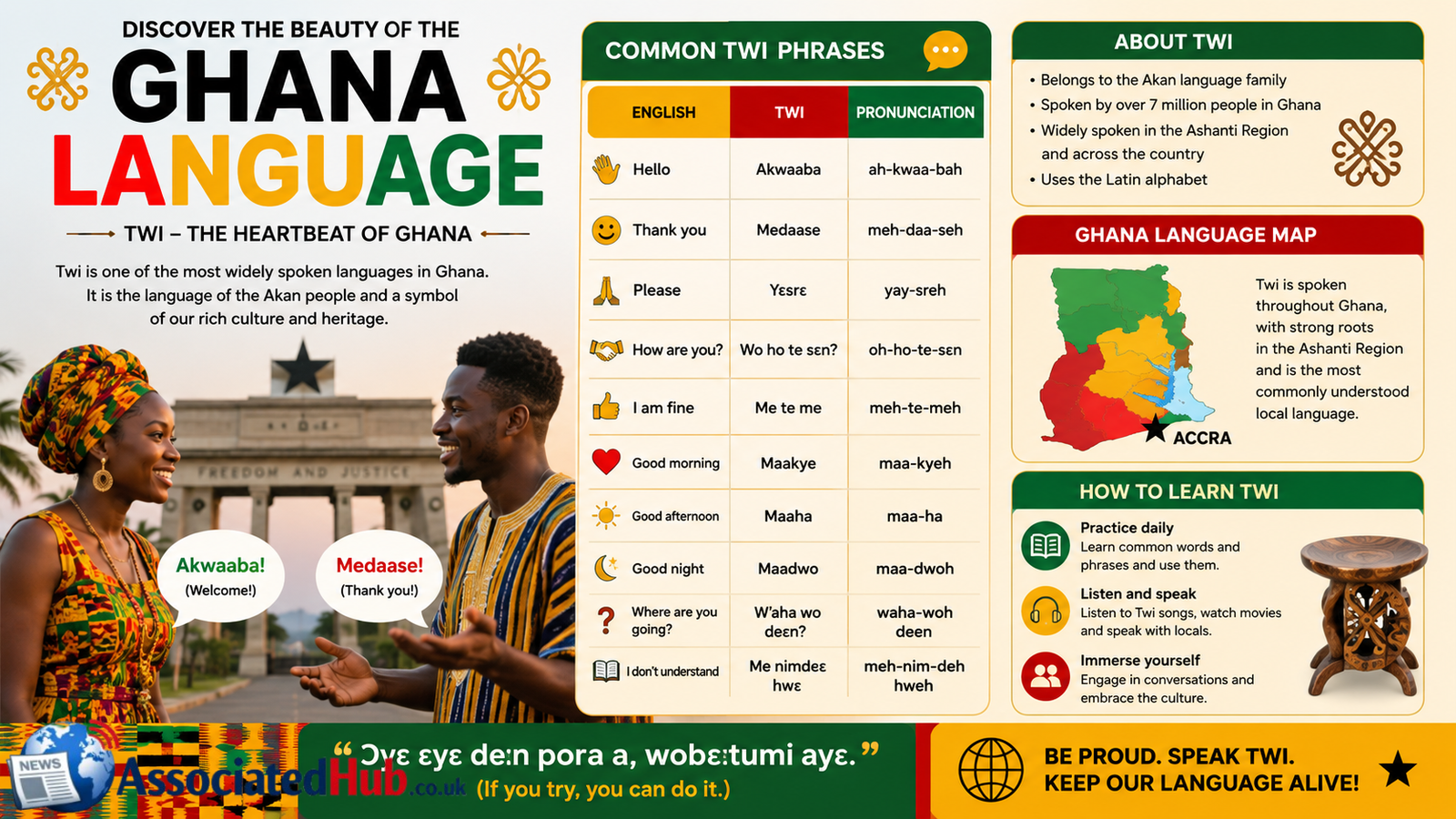
If you only learn one local language, ghana language twi is the most useful because it’s widely understood across regions—even outside its native speakers.
Why Twi Is the Most Popular Ghana Language
When people say “twi ghana language,” they’re usually referring to the Akan language group.
Why Twi matters:
- Spoken by a large percentage of the population
- Common in cities like Accra
- Used in media, music, and daily conversation
Real-World Example
If you walk into a market in Accra, speaking basic Twi phrases will often get you further than English alone.
Basic Phrases in Ghana Language (Twi)
Here are useful everyday phrases for beginners:
Greetings
- Hello in ghana language: “Ɛte sɛn?” (How are you?)
- Response: “Me ho yɛ” (I’m fine)
Polite Expressions
- Thank you in ghana language: “Medaase”
- You’re welcome: “Yoo” or “Akwaaba”
Days and Common Words
- Wednesday in ghana language: “Wukuada”
Holiday Greeting
- Merry Christmas in ghana language: “Afishapa”
Practical Tip
Pronunciation matters more than perfection. Even a simple attempt is appreciated and often leads to friendlier interactions.
Ghana Language to English Translation Basics
Understanding ghana language to english translation is easier when you know this:
- Twi is context-based
- One word can have multiple meanings depending on tone
- Sentence structure may differ from English
Example:
“Medaase” = Thank you
But tone can change emphasis or politeness level
Common Mistake
Trying to translate word-for-word rarely works. Focus on phrases, not individual words.
Using a Ghana Language Translator
If you’re searching for a ghana language translator or twi ghana language translator, here’s what you should know:
What Works Well:
- Basic phrase translation
- Simple greetings
- Everyday vocabulary
What Doesn’t Work Perfectly:
- Complex sentences
- Slang or cultural expressions
Unique Insight
Most translation tools struggle with Twi because it relies heavily on tone and cultural context, not just vocabulary. This is why human understanding still matters.
Ghana Language Twi to English: Practical Examples
Here are real examples of ghana language twi to english translation:
- “Wo din de sɛn?” → What is your name?
- “Me din de…” → My name is…
- “Wo te he?” → Where do you live?
Real-Life Scenario
If you’re traveling, learning just 10–15 phrases like these can dramatically improve communication and local experience.
Accra Ghana Language: What Do People Speak?
In Accra, language use is mixed.
You’ll hear:
- English (official communication)
- Twi (daily conversation)
- Ga (indigenous to Accra)
Practical Insight
Switching between languages—called code-switching—is extremely common. Someone may start a sentence in English and finish it in Twi.
Ancient Ghana Language: What Changed?
When people search for “ancient ghana language,” they’re usually referring to historical communication in early West African empires.
Key Facts:
- Ancient Ghana Empire used languages related to Mande groups
- Modern Ghana languages evolved separately
- Today’s Twi is not directly the same as ancient languages
Unique Insight
Modern Ghana’s language diversity is the result of migration and cultural blending, not a single historical language lineage.
How to Learn Twi Ghana Language (Step-by-Step)
If you want to go beyond basic phrases, here’s a practical approach:
1. Start With Everyday Phrases
Focus on greetings and common responses first.
2. Listen Before You Speak
Watch interviews, songs, or conversations in Twi.
3. Practice With Native Speakers
Even simple conversations improve fluency quickly.
4. Use Translation Tools Wisely
Use them for support—but not as your main learning method.
5. Repeat Daily
Consistency matters more than long study sessions.
Unique Insight
Learners who focus on listening first tend to speak more naturally than those who only memorize vocabulary.
English to Ghana Language: What You Should Know
When trying english to ghana language translation:
- Not all English words have direct equivalents
- Cultural meaning affects translation
- Simpler sentences translate better
Example:
“Good morning” → “Maakye” (Twi)
Practical Tip
Think in simple ideas, not complex sentences, when translating.
Ghana Language Map: Understanding Language Regions
A basic ghana language map helps explain usage:
- Southern Ghana → Twi and Ga
- Eastern regions → Ewe
- Northern regions → Dagbani and others
Why This Matters
Language choice depends on location. Learning Twi gives you broad coverage, but local languages may vary.
Common Mistakes When Learning Ghana Language
Avoid these:
- Assuming there is only one Ghana language
- Translating word-for-word
- Ignoring pronunciation
- Relying only on apps
Practical Tip
Focus on communication, not perfection.
FAQ: Ghana Language
What is ghana language spoken the most?
Twi is the most widely spoken local language in Ghana. English is the official language, but Twi is used more in daily conversations across many regions.
How do you say hello in ghana language?
In Twi, a common greeting is “Ɛte sɛn?” which means “How are you?” It’s often used instead of a direct “hello.”
What is the best ghana language translator?
Basic translation tools can help with simple phrases, but they struggle with tone and context. Learning key phrases and practicing with native speakers gives better results.
How to learn twi ghana language quickly?
Start with greetings, listen to native speakers, and practice daily. Focusing on real conversations instead of memorizing lists helps you learn faster.
Is Twi the only language in Ghana?
No, Ghana has over 70 languages. Twi is the most widely used, but others like Ga and Ewe are also important depending on the region.
Conclusion
Understanding the ghana language spoken isn’t about memorizing one language—it’s about recognizing a rich mix of cultures and communication styles. While Twi stands out as the most practical language to learn, knowing how translation, context, and regional differences work makes a huge difference.
Whether you want to say “thank you in ghana language,” use a ghana language translator, or start learning Twi seriously, the key is simple: focus on real communication, not perfection.
Once you grasp the basics, you’ll find Ghana’s languages not confusing—but fascinating and rewarding to explore.