
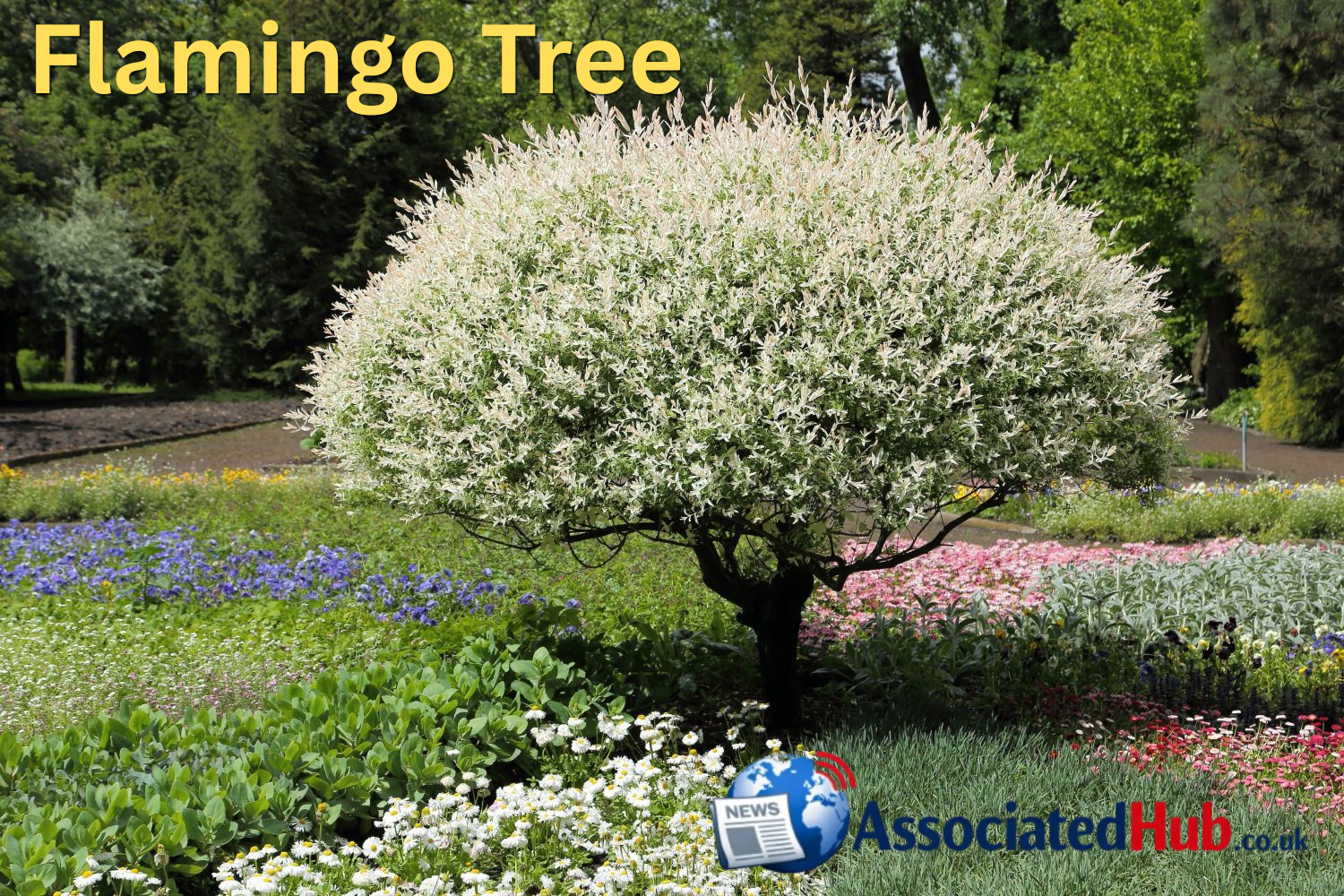
The flamingo tree has become one of the most popular ornamental trees in UK gardens because of its striking pink-and-white foliage and compact size. Many gardeners first notice it in supermarkets or garden centres after seeing labels like salix flamingo tree Asda, flamingo tree B&M, or flamingo tree The Range. But once the tree is planted, questions quickly follow: when to prune flamingo tree UK, how large does it grow, and why are the leaves turning brown or losing their pink colour?
The good news is that the pink flamingo tree is surprisingly beginner-friendly when cared for correctly. However, many owners unintentionally damage the tree through poor pruning timing, overwatering, or planting it in the wrong position. These mistakes often lead to weak growth or common salix flamingo tree problems.
This guide explains everything you need to know about flamingo tree care, pruning, winter appearance, growth habits, and troubleshooting. Whether you recently bought one from Asda or want to improve an older tree in your garden, understanding how this colourful willow behaves through the seasons makes a huge difference.
What Is a Flamingo Tree?
Salix integra ‘Hakuro-nishiki’
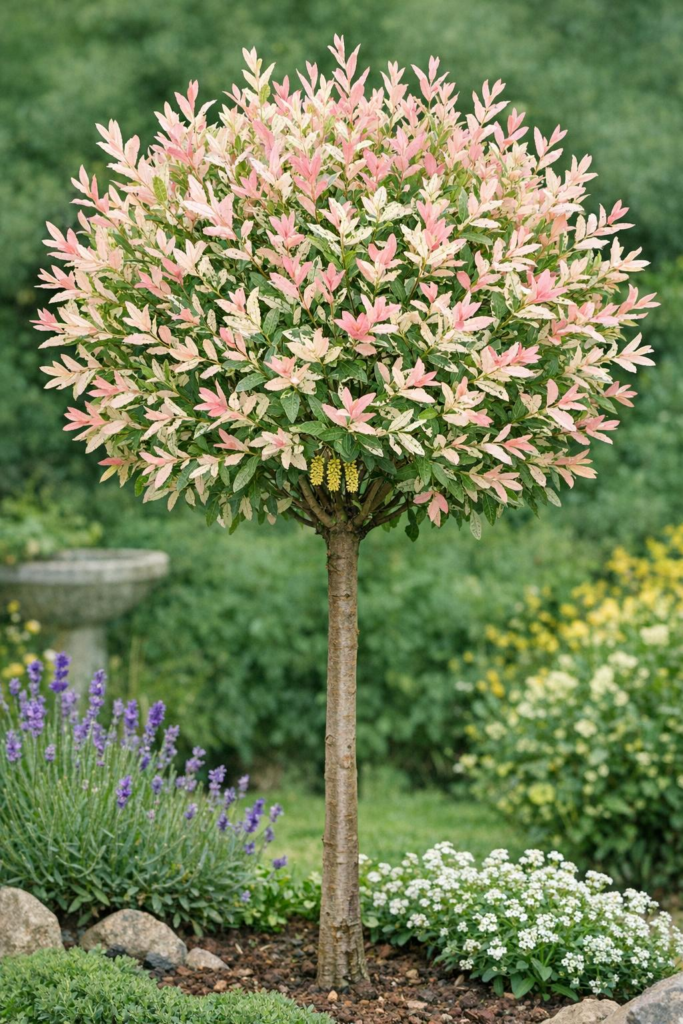
The flamingo tree, often called the salix flamingo tree, is a decorative willow grown mainly for its colourful foliage rather than flowers.
Its leaves emerge bright pink in spring before changing into a mix of green, white, and soft cream tones. The colour combination gives the tree a “flamingo” appearance, which inspired the name.
In the flamingo tree UK market, it is usually sold as a standard tree with a rounded top grafted onto a clear stem. This shape makes it ideal for:
- Small gardens
- Front lawns
- Patio containers
- Modern landscaping
- Decorative borders
Unlike large traditional willows, the flamingo tree stays relatively compact with regular maintenance.
Why the Pink Flamingo Tree Became So Popular
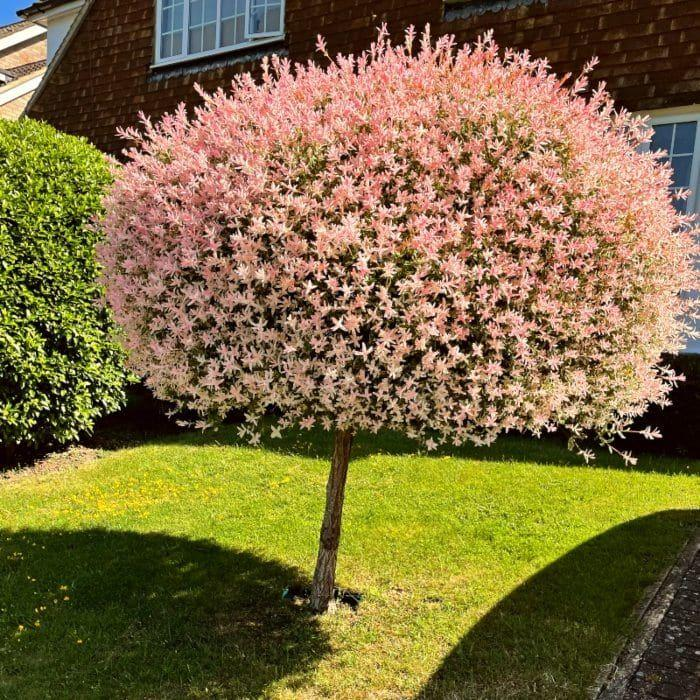
The rise in popularity happened for several practical reasons.
Instant Colour Without Flowers
Many ornamental plants rely on blooms lasting only a few weeks. The flamingo tree creates colour through foliage, meaning gardens stay visually attractive much longer.
Works Well in Small UK Gardens
Modern UK gardens are often smaller than older traditional spaces. The flamingo tree fits well because it stays manageable with pruning.
Easy to Shape
The tree responds extremely well to trimming, allowing gardeners to maintain neat rounded forms.
Available Almost Everywhere
Searches for flamingo tree Asda, flamingo tree B&M, salix flamingo tree B&Q, and the Range flamingo tree increased because supermarkets and discount garden retailers made the tree affordable and widely available.
One overlooked reason for its popularity is that the bright foliage reflects evening sunlight beautifully. Many gardeners notice the tree appears to “glow” during sunset hours in summer.
Full Grown Flamingo Tree Size
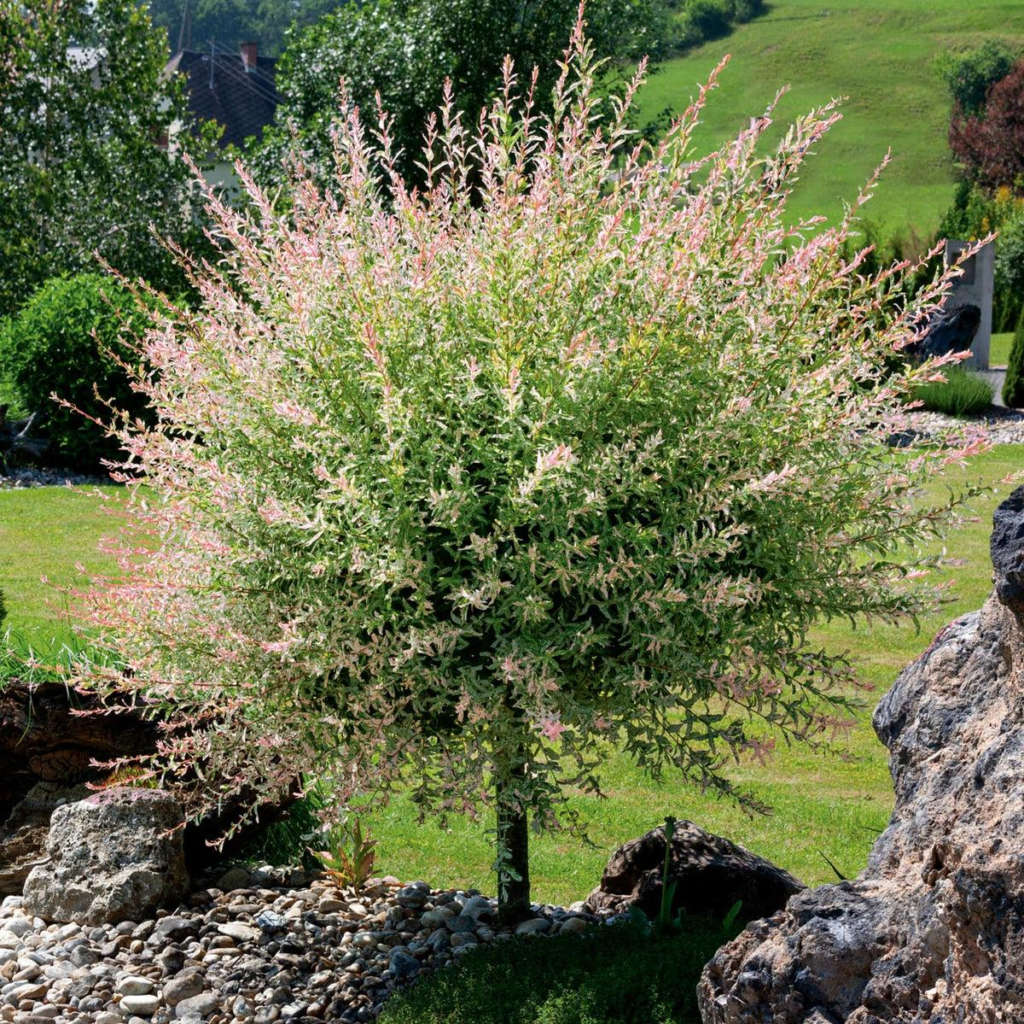
A full grown flamingo tree can reach around:
- 1.5 to 2.5 metres tall
- Similar spread when fully rounded
However, size depends heavily on pruning frequency.
Without maintenance, the crown becomes loose, oversized, and less colourful. Most gardeners prefer compact shaping because younger growth produces the strongest pink colour.
An important insight many care guides miss is that flamingo trees naturally want to grow aggressively like traditional willows. Their tidy appearance only exists because of repeated pruning.
Flamingo Tree Care Basics
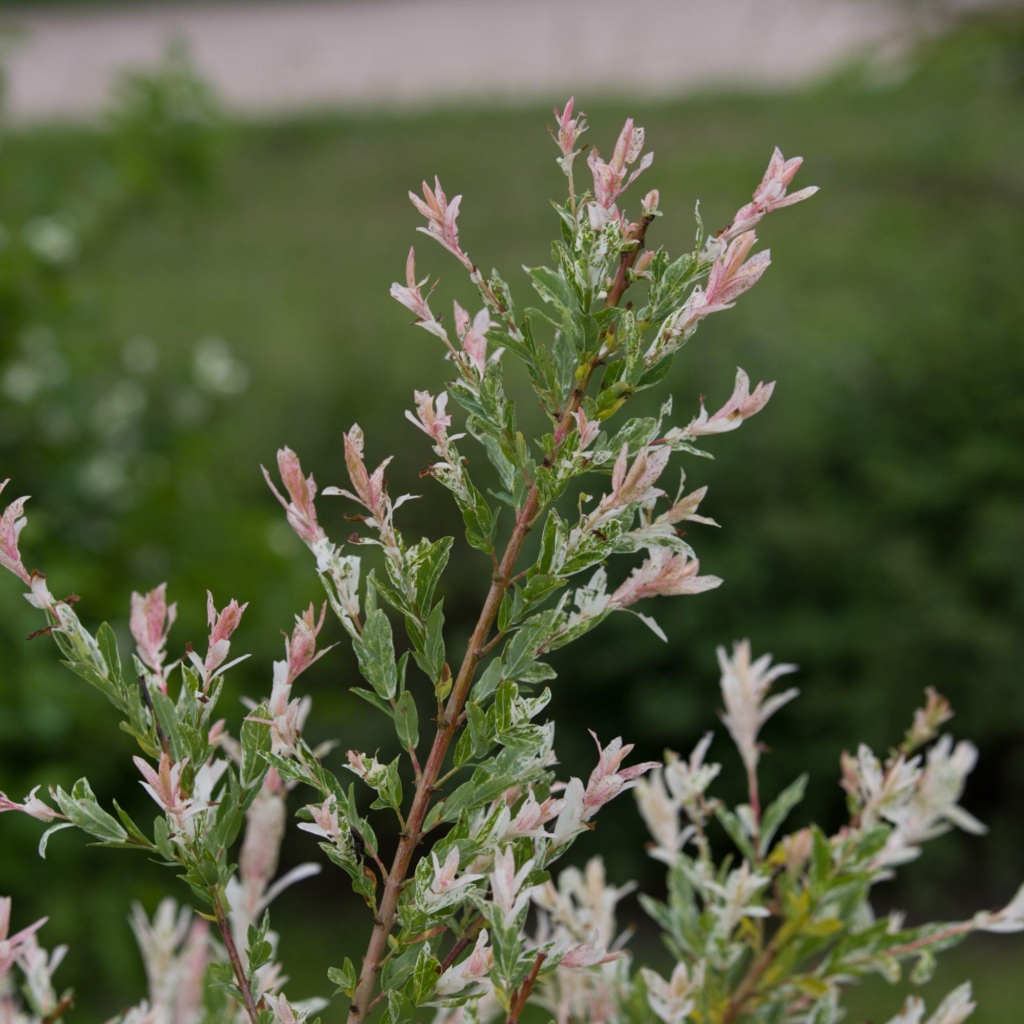
Good flamingo tree care is mostly about balance rather than constant attention.
Sunlight
The tree grows best in:
- Full sun
- Light partial shade
More sunlight usually means brighter pink foliage.
Watering
Because it belongs to the willow family, the tree prefers moist soil. Newly planted trees especially need consistent watering during warm weather.
However, constantly waterlogged soil can weaken roots over time.
Soil
The tree adapts well to most UK soils but performs best in:
- Moist but well-drained soil
- Slightly fertile ground
- Neutral to slightly acidic conditions
Feeding
A light spring feed encourages vibrant new growth. Too much fertilizer, though, can produce fast green growth with weaker pink colouring.
Salix Flamingo Tree in Winter
Many first-time owners panic when they see the salix flamingo tree in winter because it looks dramatically different.
During winter:
- Leaves fall completely
- Branches become bare
- Growth pauses temporarily
- Pink colour disappears
This is completely normal.
What surprises many gardeners is that winter actually reveals the tree’s branch structure beautifully. Younger stems often develop attractive reddish tones during colder months.
One unique insight is that winter pruning directly influences spring colour intensity. Harder winter cuts stimulate fresh pink shoots in spring.
When to Prune Flamingo Tree UK
The biggest maintenance question is when to prune flamingo tree UK.
Timing matters because incorrect pruning affects shape and foliage colour.
Best Time for Main Pruning
Late winter to early spring is ideal before strong new growth begins.
This encourages:
- Fresh pink shoots
- Dense rounded shape
- Healthier branching
Summer Maintenance Trim
A lighter trim in summer can refresh colour and maintain neatness.
Avoid Heavy Autumn Pruning
Cutting too aggressively before winter may expose fresh growth to frost damage.
Flamingo Tree Pruning Step-by-Step
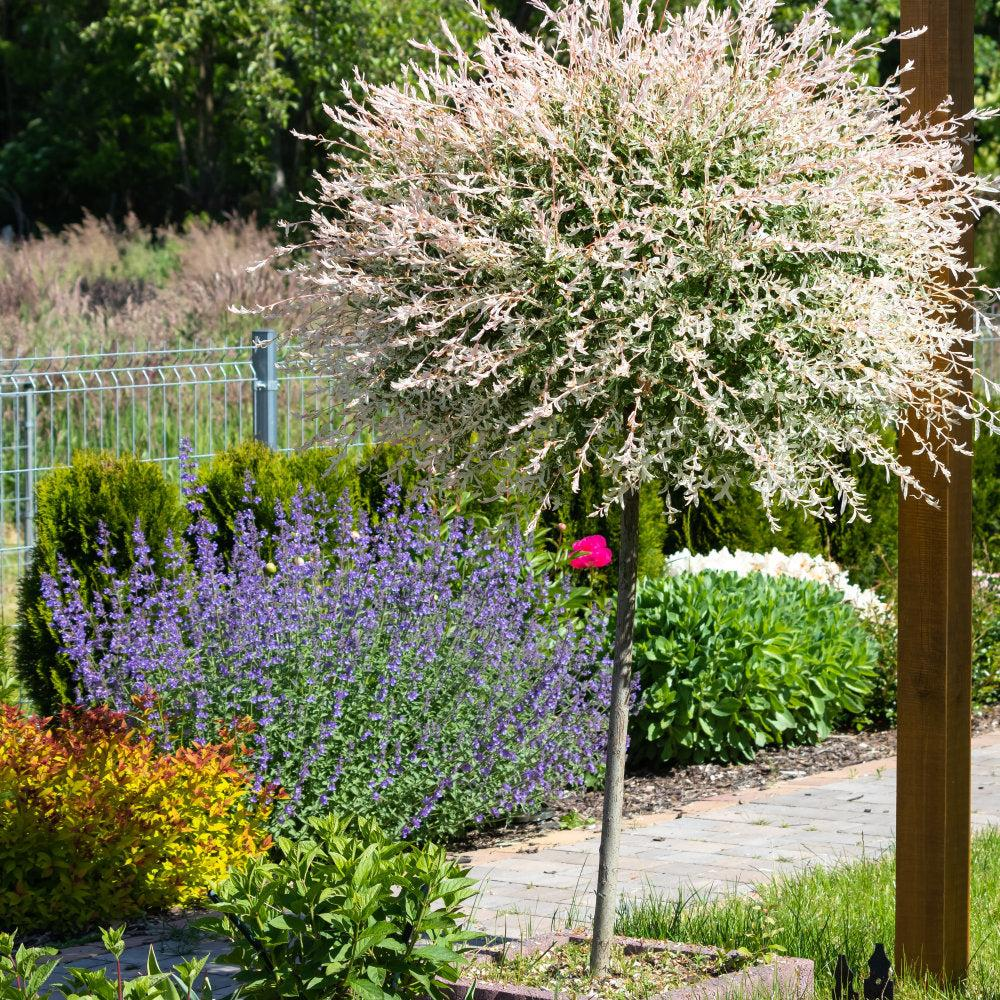
Flamingo tree pruning is simpler than many people expect.
Step 1: Remove Dead Branches
Always start by cutting damaged or dead stems.
Step 2: Reduce Overall Size
Trim back the rounded canopy evenly.
Step 3: Encourage New Shoots
Cutting stronger branches stimulates colourful new growth.
Step 4: Maintain Shape
Aim for an even ball-shaped crown.
One professional gardening trick rarely mentioned is that slightly uneven pruning often looks more natural than perfectly symmetrical cuts.
Salix Flamingo Tree Problems
Several salix flamingo tree problems appear regularly in UK gardens.
Brown Leaf Tips
Usually caused by:
- Dry soil
- Wind exposure
- Heat stress
Loss of Pink Colour
Often happens because:
- The tree needs pruning
- Too much shade
- Excess nitrogen fertilizer
Sparse Growth
Can result from:
- Old woody branches
- Lack of sunlight
- Poor pruning routines
Blackened Stems
Sometimes linked to fungal problems in overly wet conditions.
Many people searching for salix flamingo tree problems pictures are trying to compare leaf damage online. However, different problems can appear visually similar, making watering habits and recent weather important clues.
Common Mistakes That Damage Flamingo Trees
Planting in Deep Shade
This weakens foliage colour dramatically.
Forgetting to Water New Trees
Young roots dry quickly during hot weather.
Never Pruning
Without trimming, the tree becomes untidy and less vibrant.
Overfeeding
Too much fertilizer encourages fast green growth instead of colourful foliage.
Using Blunt Tools
Rough cuts increase disease risk.
Buying a Flamingo Tree in the UK

The flamingo tree UK market has expanded rapidly.
Popular retailers include:
- Asda flamingo tree seasonal sales
- Salix flamingo tree B&Q garden centres
- Flamingo tree B&M promotions
- Flamingo tree The Range garden sections
Retail quality can vary significantly.
Smaller supermarket versions may need repotting quickly because roots often become crowded in temporary containers.
One useful insight is that slightly smaller younger trees often establish better than oversized discounted specimens.
Growing Flamingo Trees in Pots
Container growing works extremely well if done properly.
Choose:
- Large containers
- Moisture-retaining compost
- Good drainage holes
Potted trees need more watering than ground-planted trees because willow roots dry quickly.
During very cold winters, container roots are also more exposed to frost.
How Fast Does a Flamingo Tree Grow?
The salix flamingo tree grows surprisingly quickly compared to many ornamental trees.
Healthy trees may produce:
- 30–60 cm of annual growth
- Rapid spring shoots after pruning
- Dense summer foliage
Fast growth explains why regular maintenance matters so much.
Can Flamingo Trees Survive Harsh Winters?
Yes, the flamingo tree handles UK winters well once established.
However:
- Young trees may need protection in severe frost
- Container plants are more vulnerable
- Strong winter winds can damage exposed branches
Even when winter appearance seems dramatic, healthy trees usually recover strongly in spring.
FAQ
When to prune flamingo tree UK for best colour?
Late winter or early spring is the best time for major pruning. This encourages fresh pink growth during spring and summer.
Why is my salix flamingo tree losing its pink leaves?
Lack of sunlight, insufficient pruning, or excessive fertilizer often causes fading colour. New growth usually carries the brightest pink tones.
How big does a full grown flamingo tree get?
A full grown flamingo tree normally reaches 1.5 to 2.5 metres tall and wide, depending on pruning and growing conditions.
What does a salix flamingo tree look like in winter?
In winter, the tree loses its leaves and becomes bare. This is completely normal and part of its natural dormant cycle.
Are flamingo trees difficult to care for?
No, flamingo tree care is relatively simple once watering and pruning routines are understood. Regular trimming is the most important task.
Can I grow a flamingo tree in a pot?
Yes, flamingo trees grow well in containers if they receive enough water and root space. Larger pots usually produce healthier long-term growth.
Conclusion
The flamingo tree remains one of the most rewarding ornamental trees for UK gardens because it combines vibrant colour, manageable size, and relatively easy care. Whether you purchased a salix flamingo tree Asda special offer or invested in a mature garden-centre specimen, success mainly comes down to proper pruning, consistent moisture, and good sunlight.
Understanding seasonal changes is equally important. The tree’s winter appearance may look worrying at first, but those bare branches are simply part of its growth cycle. With thoughtful maintenance, regular shaping, and patience, the pink flamingo tree can become one of the standout features in almost any garden space.